

Based on the latest energy bill data, the CCC analysed the energy costs of electric households compared to those using fossil fuel technologies.
Key findings:
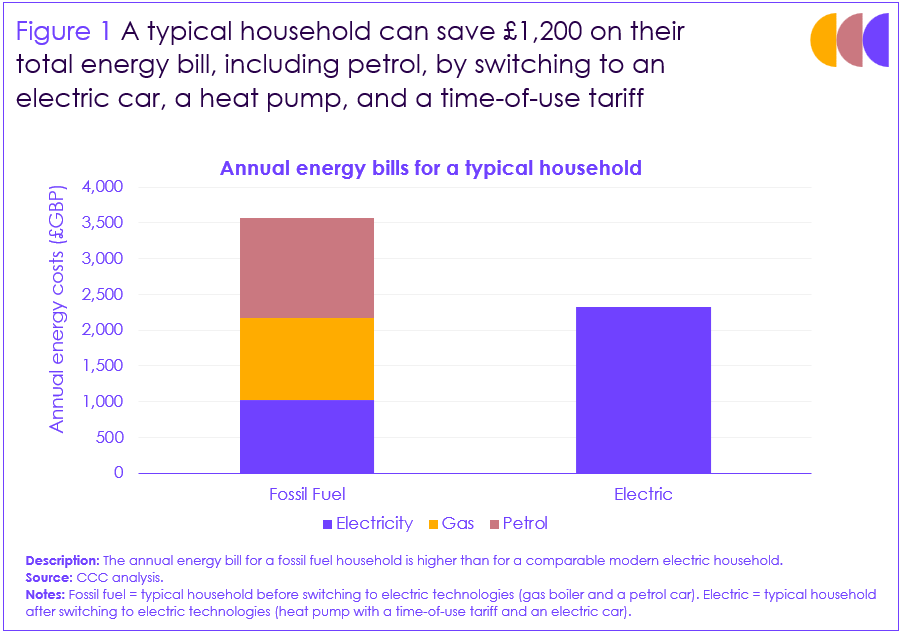
- A typical household can save £1,200 on its energy bill by going electric, because electric technologies are more efficient than those using fossil fuels (Figure 1).
- For the typical household, energy use is not just about heating, lighting, and household appliances. Most households also buy energy in the form of petrol or diesel to fuel their cars. However, petrol and diesel are not included in the dual fuel bill from a supplier.
- While the price cap announced today means the typical household with a gas boiler will see their annual dual fuel bill increase by £400, this rises to £600 if you also include the increase in petrol costs over the last quarter. This means the typical ‘triple fuel’ bill, including electricity, gas and petrol, has increased to £3,600 per year for a typical household with a petrol car and a gas boiler.
- For a typical household with access to home charging, switching to an electric car would reduce bills by £700.[1] Switching to a heat pump with a time-of-use tariff would reduce bills by a further £500, bringing the annual energy bill down to under £2,400.[2]
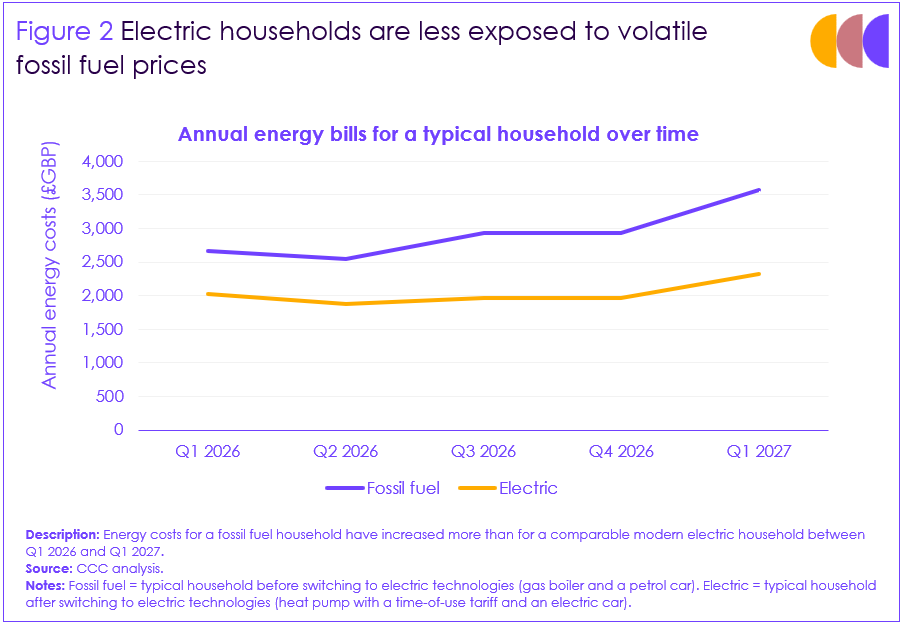
- Energy bill increases since the start of the Iran war have been three times higher for a typical fossil fuel household than for a modern electric household – a household with an electric car, a heat pump and a time-of-use tariff (Figure 2).
- While electric technologies involve higher upfront costs of £200 per year, the typical household’s total annualised costs still fall after switching.[3] Even after accounting for upfront and maintenance costs a typical household can still save over £1,100 per year based on current energy prices, by switching to an electric car, a heat pump and a time-of-use-tariff.
- A heat pump and an electric car can be just the start of a household’s electrification journey. Households can reduce their energy bills and their exposure to volatile fossil fuel prices even further by installing solar panels and batteries.
- Not all homes are suitable for all of these technologies and the degree to which households can buy and use them will vary. For many households, other options for reducing energy bills include switching tariffs or accessing support from suppliers or grant schemes.
- CCC recommendations in our report Progress in reducing emissions 2026 report to Parliament, include making electricity cheaper, removing barriers to accessing low carbon technologies, and improving access to affordable public charging.
Notes on definitions:
- Typical household before switching to electric technologies: a typical household with a gas boiler, with electricity and gas consumption as outlined in Ofgem’s Typical Domestic Consumption Values (TDCV). Petrol use for driving based on median household car mileage from the National Travel Survey.
- Typical household after switching to electric technologies: final energy demand and car mileage as above, but with alternative technology and tariff choices. An air source heat pump replaces the gas boiler, a time-of-use tariff is taken up and an electric car with access to at-home charging replaces the petrol car.
- Energy costs: for home energy this includes costs of heating, cooking, lighting, and other home energy use as well as standing charges. For driving, this includes costs of fuel or charging.
- Total costs: energy costs, annualised technology costs, installation costs (including one-off retrofit costs), financing costs, maintenance costs and savings from policy support such as grants and low interest loans.
- Latest prices: Ofgem Q1 2027 price cap for electricity and gas, and October 2026 monthly prices for petrol and public EV charging costs (the latest available at the time of writing).
The CCC’s analytical approach to assessing household energy bills is set out in the accompanying methodology note.
[1]The £700 per year saving for a typical household switching to an electric car includes energy costs only, but increases to £800 per year when including upfront costs, maintenance, insurance, and VED. This corresponds to the £800 savings figure referenced in our recent publication Letter: Nigel Topping CMG to the Rt Hon Heidi Alexander MP, Secretary of State for Transport, on the Zero-Emission Vehicle (ZEV) Mandate Review..
[2] The energy bill of under £2,400 for a typical electric household includes home energy and transport costs. This is not comparable to the typical dual fuel bill of £2,166 in Ofgem’s recent price cap announcement as that covers home energy costs only. Including transport costs, the typical household with a gas boiler and petrol car has a total energy bill of £3,600.
[3] Upfront costs are amortised over the lifetime of the technology. See accompanying methodology note for further details.
Topics