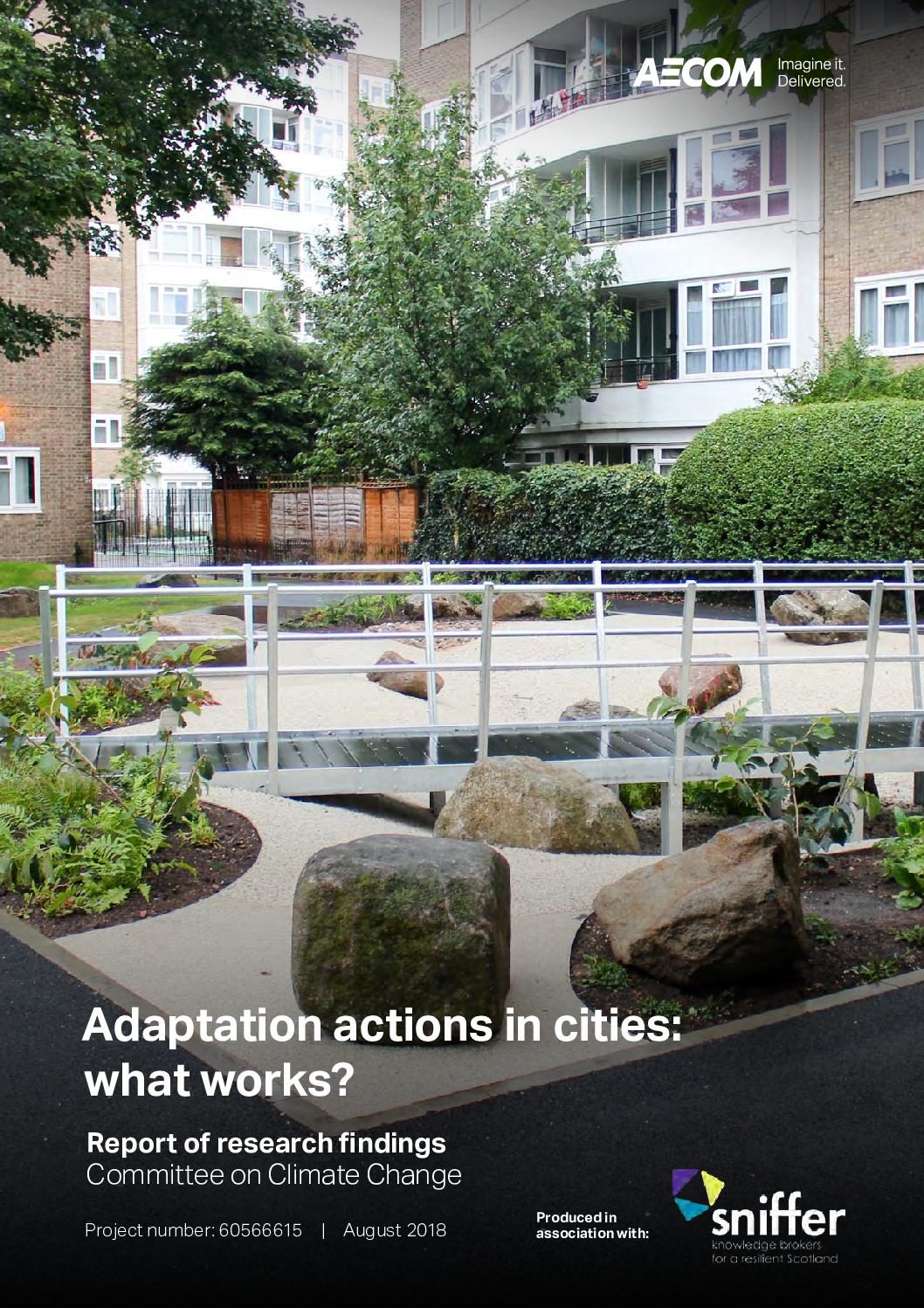
The Committee on Climate Change’s Adaptation Committee commissioned AECOM to produce two reports assessing adaptation actions in the UK’s cities and natural environment.
These reports support the committee’s work on assessing actions to adapt to the current and future impacts of climate change across a number of sectors, and how the vulnerability to its impacts changes over time.
The findings will inform the Adaptation Committee’s next progress in 2019.
The key recommendations from cities’ report include:
- Successful adaptation projects establish realistic timescales to development and delivery projects
- Adaptation projects should clearly identify where taking action can support delivering multiple benefits .e.g. health, regeneration (etc.)
- Securing political support contributes to success
- Monitoring and evaluation should be central for innovative projects where outcomes are uncertain, or for more complicated hazards like heat
- Project owners should map and understand stakeholders at an early stage
The key recommendations from natural environment report include:
- The most successful projects sell climate change adaptation as part of broader benefits
- Reduce ‘siloed’ projects – encourage and support a comprehensive approach to addressing climate change alongside other policy issues
- A new land management subsidy regime based on ‘public payments for public goods’ to encourage more long-term land planning
- Government should consider how to reduce the risk of funding bids for larger adaptation projects, and reduce the barriers to accessing finance for cities
Topics